

“이 다큐 너무나 귀합니다 전시장에서 보고 눈물이 주르륵 흘렀었어요.”
“관람객 모든 분이 숨죽여서 영상에 몰입해서 본 것 같아요. 전시도 좋았는데 영상으로 또 한 번 강렬한 기억을 남겨주셔서 감사합니다.”
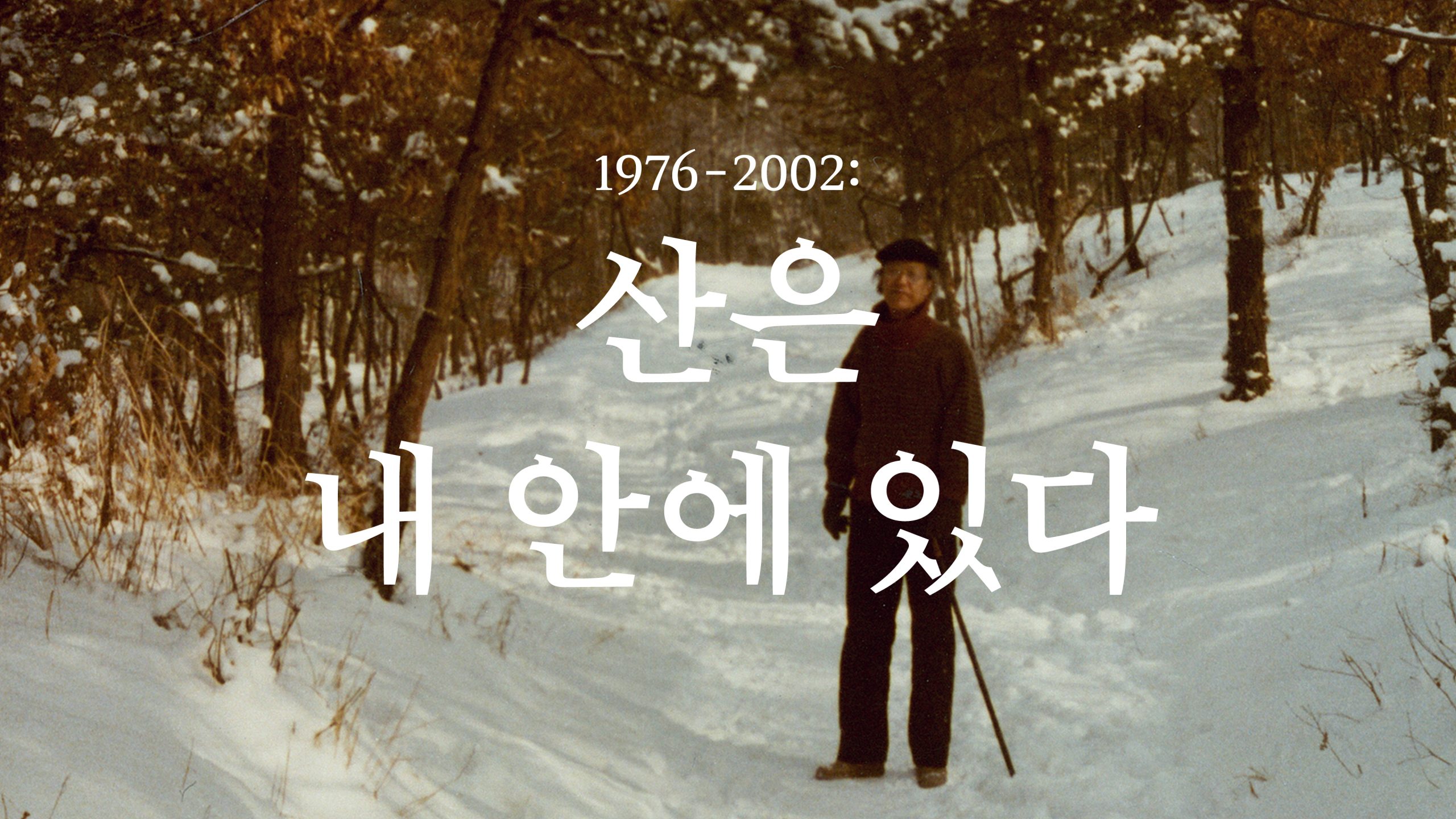
서울시립미술관 서소문본관에서 열리는 ‘유영국: 산은 내 안에 있다’ 전시 맨 마지막에 있는 다큐멘터리 ‘유영국(永國): 무한을 걷는 사람’을 보고 관람객들이 남긴 후기다. 미술관 전시의 마지막 순서인 다큐멘터리나 영상 자료는 대부분의 관람객이 끝까지 보지 않고 지나치는 경우가 많다. 하지만 이 전시에서는 다큐멘터리를 상영하는 공간이 언제나 관람객으로 꽉 차 있을 정도로 인기가 많다. 30분 가까이 되는 상영 시간에도 중간에 자리를 뜨는 사람을 찾아보기 어렵다. 온라인, 소셜미디어의 미술 감상 동호회에선 “유영국 전시를 보기 전에 다큐멘터리를 먼저 보는 것이 좋다”는 조언까지 올라온다.
다큐 ‘유영국: 무한을 걷는 사람’
6개월간 홀로 작업한 김선혁 감독
13일에도 미술관이 문을 여는 오전 10시가 되자 중년 여성 두 명이 전시실을 건너뛰고 다큐멘터리를 먼저 보러 왔다. 미술관 측은 “유영국 전은 개막 63일째인 지난달 29일 누적 관객 20만명이 넘었다”며 “이렇게 빨리 관객이 늘어난 데엔 다큐멘터리도 한몫했다고 본다”고 했다. 이달 안에 25만 관객 돌파도 앞두고 있다.
다큐멘터리를 만든 이는 김선혁 감독이다. 뮤직비디오, 브랜드 영상 작업과 함께 미술관 전시 다큐멘터리도 만들고 있다. 이날 전시장에서 만난 김 감독은 “6개월간 다큐멘터리 작업을 하면서 유영국 작가의 작품을 수없이 여러 번 봤다”며 “매번 형태와 색감이 새롭고, 여전히 살아 숨 쉬는 느낌을 받았다”고 했다.
김 감독이 연출한 영상은 미술사적 설명을 늘어놓는 대신 유영국이 남긴 희소한 어록을 뼈대로 삼았다. 그가 태어나고 자란 경북 울진의 산과 바다, 나무와 바람, 물결을 천천히 훑는 화면 위로 가족과 주변 사람들이 기억하는 그의 목소리와 삶이 겹쳐진다. 특히 인상적인 것은 화면 속 자연과 조금 전까지 보았던 그림이 서로 포개지는 순간이다. 겹겹이 이어지는 산등성이와 수평선, 햇빛에 따라 달라지는 숲과 바다의 색을 바라보고 있으면 유영국의 캔버스에 등장했던 삼각형과 곡선, 빨강·파랑·초록이 어디에서 왔는지 자연스럽게 짐작된다. 김 감독은 “지난 3월 일주일간 혼자서 울진에 촬영을 다녀왔다”며 “스케줄이나 목적지를 정해놓지 않고, 작가님의 시선을 따라 풍경을 보려고 했다”고 했다.
“작가님의 시선이 시간과 계절에 따라 겹겹이 쌓여갔듯, 저도 이유 없이 다음 날 밤이나 해 뜰 때 같은 장소를 다시 찾아가 보고, 정처 없이 목적 없이 쏘다니며 시간대별로 변하는 인상을 찍었습니다. 다큐멘터리 엔딩에 나오는, 산세를 넘어 고요하게 펼쳐지는 은은한 바다 풍경도 바로 그렇게 찾아온 우연의 선물이었죠.”
유영국은 조수를 쓰지 않고 홀로 작업했다. 김 감독 역시 영상 스튜디오 ‘카스카’를 혼자 운영하고 있다. 유영국의 서울 방배동 작업실을 촬영할 때 빼고는 모든 과정을 혼자서 작업했다. 홀로 작업하는 감독이 평생 홀로 작업한 화가의 흔적을 좇은 셈이다. 그는 “수십 년 동안 변함없이 자신의 시간을 온전히 작업에 쏟아부은 단단한 삶을 보며 마치 거인의 어깨 위에 올라선 것 같았다”며 “‘내가 좋아하는 방식을 지키면서 이대로 걸어가도 되겠다’는 작업자로서의 용기를 얻었다”고 했다. 다큐멘터리 제목도 김 감독이 직접 지었다.
“작업을 마칠 때쯤 작가님의 이름에 있는 ‘길 영(永)’ 자가 눈에 들어왔어요. 작업실과 작품을 들여다보면서 끝이 없는 ‘무한’을 느꼈거든요. 거기에 한번 방향을 정하면 그곳을 향해 뚜벅뚜벅 걸어가는 작가님의 성정이 겹쳐지면서 ‘무한을 걷는 사람’이라는 이미지가 떠올랐습니다.”
변희원 기자 2026.08.14.
기사 원문
Documentary Fuels Yoo Young-kuk Exhibition’s 200,000 Visitors
Director Kim Sun-hyuk’s film connects artist’s Uljin landscapes to paintings, deepening visitor engagement
“This documentary is so precious. I watched it at the exhibition and tears streamed down my face.”
“I think all visitors held their breath and immersed themselves in the video. The exhibition was great, but the documentary left another strong impression. Thank you.”
These are reviews left by visitors who watched the documentary “Walking into Eternity” at the end of the exhibition “Yoo Youngkuk: A Mountain Within Me”held at the Seoul Museum of Art Seosomun Main Branch. In most exhibitions, documentaries or video materials at the end are often skipped by many visitors. However, in this exhibition, the space where the documentary is screened is always packed with visitors. Even during the nearly 30-minute runtime, it’s hard to find anyone leaving their seat midway. Online and on social media art appreciation communities, advice like “It’s better to watch the documentary first before viewing the Yoo Young-kuk exhibition” has even appeared.
On the 13th, as soon as the museum opened at 10 a.m., two middle-aged women skipped the exhibition hall and came to watch the documentary first. A source from the museum said, “The Yoo Young-kuk exhibition surpassed 200,000 visitors on July 29, the 63rd day since its opening,” adding, “The documentary also played a significant role in this rapid increase in visitors.” The exhibition is also expected to surpass 250,000 visitors within this month.
The director of the documentary is Kim Sun-hyuk. Alongside music videos and brand content, he also produces documentaries for art exhibitions. Meeting him at the exhibition, Kim said, “While working on the documentary for six months, I watched Yoo Young-kuk’s works countless times,” adding, “Every time, the forms and colors felt new, and I sensed that they were still alive and breathing.”
Instead of listing art historical explanations, the video Kim directed is structured around Yoo’s rare recorded sayings. Scenes slowly panning over the mountains, seas, trees, winds, and waves of Uljin, Gyeongbuk—where Yoo was born and raised—are overlaid with the voices and memories of his family and people around him. Particularly striking are the moments when the nature on screen overlaps with the paintings viewed just moments earlier. As one gazes at the layered mountain ridges, horizons, and the changing colors of forests and seas under sunlight, it naturally becomes clear where the triangles, curves, reds, blues, and greens in Yoo’s canvases originated. Kim said, “I spent a week alone filming in Uljin last March,” adding, “Without setting a schedule or destination, I tried to follow the artist’s gaze to capture the scenery.”
“Just as the artist’s gaze was layered over time and seasons, I revisited the same places at night or dawn the next day without reason, wandering aimlessly and capturing impressions that changed with the time of day. The subtle sea landscape quietly unfolding beyond the mountain ridges at the end of the documentary was also a gift of chance discovered this way.”
Yoo worked alone without assistants. Kim also runs his video studio, ‘CASCA,’ by himself. Except when filming Yoo’s studio in Bangbae-dong, Seoul, he handled all processes alone. In a way, the solo-working director traced the traces of the lifelong solo-working painter. He said, “Seeing the solid life of someone who devoted his time entirely to his work without change for decades made me feel like standing on the shoulders of a giant,” adding, “I gained courage as a worker to keep going this way while protecting the methods I love.” Kim also came up with the documentary’s title.
“As I neared the end of the work, the character ‘Yeong’ (永), meaning ‘eternity,’ in the artist’s name caught my eye. While looking into his studio and works, I felt the endless ‘infinity.’ This overlapped with the artist’s temperament of setting a direction and walking steadfastly toward it, and the image of ‘the man who walks infinity’ came to mind.”
By Byun Hee-won 2026.08.14.
Article Link